 how-to
How to Get Keys Out of a Locked Car Without Damage
Table of Contents
- What to Do First When Your Keys Are Locked Inside
- Safe DIY Methods to Get Locked Car Keys Out Without Damage
- Why Coat Hangers and Wire Tools Usually Cause More Harm Than Good
- Vehicle-Specific Limitations: Modern Security Systems Change Everything
- Automotive Locksmith Services: When to Call a Professional
- Understanding the Cost of Car Lockout Service
- Car Lockout Prevention Tips to Avoid This Situation Again
- Conclusion
Last Updated: August 25, 2026
What to Do First When Your Keys Are Locked Inside
Getting keys out of a locked car without damage starts with one rule: slow down. Panic leads to prying, and prying leads to bent door frames, torn weather stripping, and triggered security alarms.
At JFJ Locksmith, we respond to vehicle lockouts regularly.
Here's what to do immediately:
- Check all doors and the trunk. Many drivers assume every door is locked when one might not be.
- Look for a spare key. A quick call to a family member or trusted contact can save hours.
- Assess your vehicle's age and lock type. A 1998 truck with a manual lock post responds to different methods than a 2023 SUV with keyless entry.
- Check your roadside assistance coverage. Many auto insurance policies, credit cards, and manufacturer warranties include lockout service.
- Stay safe. If you're in an isolated area or feel unsafe, call 911 first.
A car lockout is a vehicle access problem, not a lock-picking problem. Keeping that distinction clear helps you choose the right path forward.
Safe DIY Methods to Get Locked Car Keys Out Without Damage
DIY unlocking is only appropriate for older vehicles with manual locking mechanisms. If your car has a push-button start, proximity keyless entry, or electronic door controls, skip this section and read the vehicle-specific limitations section below. Attempting physical entry on modern security systems can trigger immobilizers, damage electronic components, or void warranties.
The Shoelace Loop Method (Older Manual Locks Only)
The shoelace method works on vehicles with a vertical manual lock post, typically found on older domestic trucks and sedans. It does not work on horizontal sliders, electronic fobs, or modern keyless entry systems.
How it works:
- Tie a small loop in a shoelace or thin cord, roughly finger-sized.
- Work the lace into the corner of the door frame at the top, between the door and frame.
- Maneuver the loop down and around the lock post using a back-and-forth sawing motion.
- Pull both ends simultaneously to tighten and lift.
The biggest mistake is forcing the lace through the weather stripping. If it's not sliding in with light pressure, it won't work on that vehicle. Forcing it damages the window seal and creates water leak problems far costlier than a locksmith visit.
Using a Wedge and Slim Jim Tool
A slim jim is a thin, flat metal tool that slides between the window glass and weather stripping to manipulate the latch or unlock rod directly.
This is not a beginner technique. On vehicles manufactured after the mid-2000s, the interior door panel contains wiring harnesses, airbag sensors, and electronic control modules within millimeters of where a slim jim travels (nhtsa.gov). Catching any of these causes serious damage.
For older vehicles where the slim jim is appropriate:
- Create a small gap at the top of the door using a plastic wedge, not a metal one.
- Insert the slim jim between the glass and weather stripping.
- Feel for the unlock rod or latch mechanism.
- Apply gentle lateral pressure to manipulate the rod.
According to the Automotive Service Association's guidance on vehicle access, improper use of slim jim tools is among the most common causes of preventable door damage during lockout situations.
The Inflatable Bladder and Rod Method
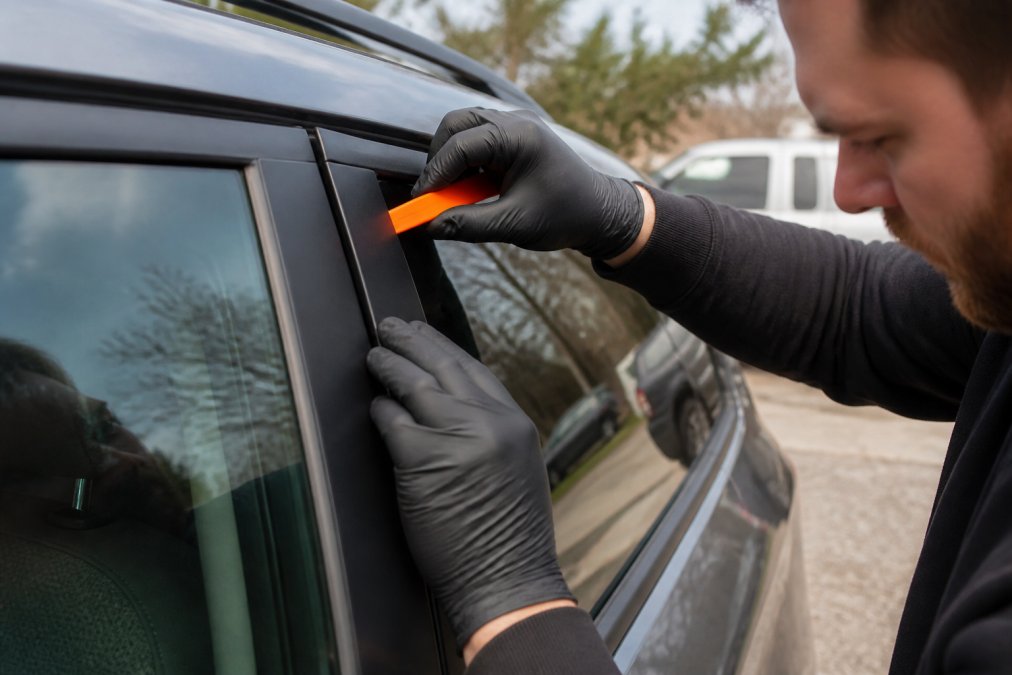
An inflatable bladder and long reach rod is the method professional locksmiths use most often on modern vehicles. It's also the safest DIY option if you have access to the tools, typically sold as an emergency lockout kit.
- Place the deflated bladder in the top corner of the door frame.
- Slowly inflate it until a gap of roughly 2-3 centimeters opens.
- Insert the reach rod through the gap and press the interior unlock button or pull the interior door handle.
The key word is slowly. Overinflating the bladder bends the door frame and misaligns the door, creating rattles, water leaks, and latch problems.
Why Coat Hangers and Wire Tools Usually Cause More Harm Than Good
A wire coat hanger is the most common DIY attempt and, by a significant margin, the most damaging one.
A coat hanger is uncontrolled and unpredictable. It scratches paint around door edges, gouges weather stripping, and on modern vehicles, snags wiring harnesses running through the door cavity. Water intrusion through a compromised window seal shows up weeks later, and electrical faults from a snagged wire can appear as random sensor errors months down the line.
People also apply far more force than they realize when fishing a coat hanger through a door. That force damages the door frame or latch assembly.
A coat hanger won't work on any vehicle with electronic door controls. There's no mechanical rod to hook. The unlock function is triggered by a signal, not a physical pull.
Coat hangers made sense on 1970s vehicles with simple mechanical linkages. On anything newer, the risk-to-reward ratio is poor.
Vehicle-Specific Limitations: Modern Security Systems Change Everything
Vehicles manufactured in the last decade operate on fundamentally different security architectures than older models. Understanding this distinction protects you from methods that won't work and attempts that make your situation worse.
Keyless entry and push-button start vehicles use proximity-based electronic fobs. The locking mechanism is controlled by the vehicle's body control module, not a mechanical rod. A slim jim has nothing to engage. A shoelace loop finds no post to grab.
Immobilizer systems add another layer. Even if you gain physical access, many modern cars won't start without the correct encrypted signal from the key fob.
Transponder keys and smart keys contain chips that communicate with the vehicle's electronic control module. Forcing entry without the correct key can trigger a lockout mode requiring dealer-level or professional locksmith reprogramming.
Trunk release mechanisms on modern vehicles are often electronic. The advice to "access through the trunk" assumes a mechanical pass-through, which many newer sedans no longer have.
If your vehicle was manufactured after approximately 2015, assume no DIY method is appropriate. The locking mechanism is electronic, and the correct solution is a professional with the right tools for your specific make and model.
Automotive Locksmith Services: When to Call a Professional
A professional automotive locksmith is the right call in the majority of lockout situations.
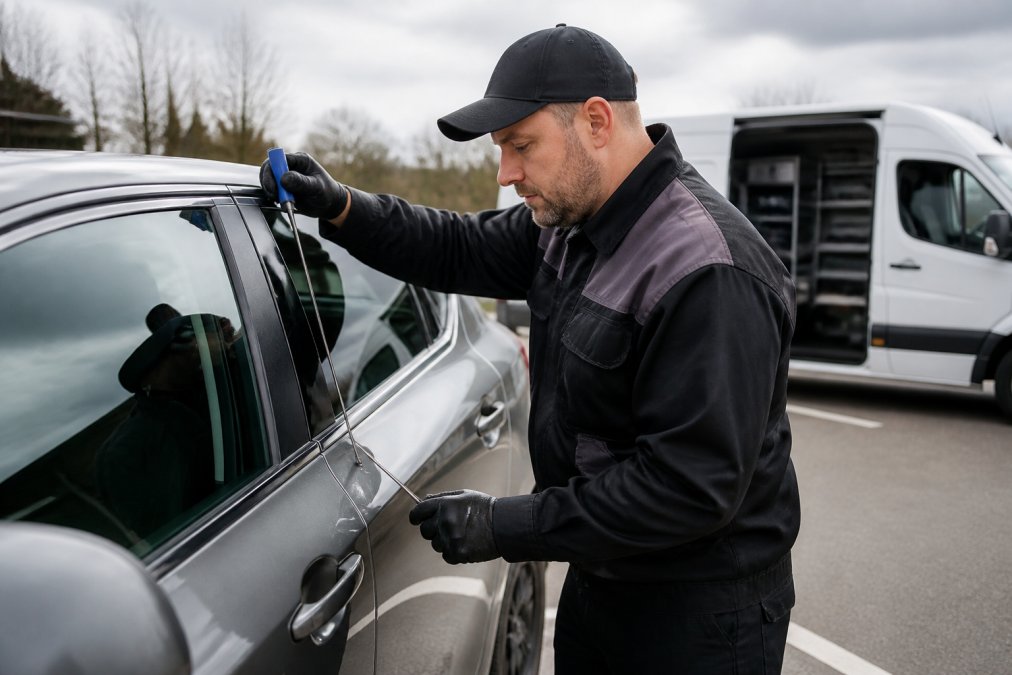
Call a locksmith immediately if:
- Your vehicle is newer than approximately 2010
- Your vehicle uses keyless entry or push-button start
- You've already attempted a DIY method without success
- You can see your key fob inside the vehicle
- You're in an unsafe location
- You don't have proper wedge and rod tools
A qualified automotive locksmith arrives with the correct non-damaging entry tools for your specific vehicle. For modern vehicles, this typically means an inflatable bladder and reach rod set. For vehicles requiring key programming after entry, a professional locksmith with automotive module programming capability can handle that on-site.
The distinction between a general locksmith and an automotive specialist matters. Automotive locksmith services require specific training and equipment for vehicle-specific entry and key programming.
Understanding the Cost of Car Lockout Service
The cost of car lockout service varies based on several factors.
Factors that affect lockout service pricing:
| Factor | Impact on Cost |
|---|---|
| Vehicle age and lock type | Older mechanical locks cost less than modern electronic systems |
| Time of day | After-hours, weekend, and holiday calls typically cost more |
| Location | Remote or difficult-to-access locations may add a service fee |
| Key programming required | If entry requires key cutting or fob programming, costs increase |
| Roadside assistance coverage | Your policy may cover part or all of the cost |
Before paying out of pocket, check these coverage sources:
- Auto insurance policy: Many comprehensive policies include roadside assistance with lockout coverage.
- Credit card benefits: Several major credit cards include roadside assistance as a cardholder benefit.
- Manufacturer warranty programs: Some vehicle manufacturers include roadside assistance for the first few years of ownership.
- AAA membership: Lockout service is typically included.
According to the Insurance Information Institute's guide to auto insurance coverage, roadside assistance riders are among the most underutilized benefits in auto insurance policies.
JFJ Locksmith's pricing depends on the specific vehicle, the service required, and the situation. Contact us directly for current pricing or to get a quote before committing.
Car Lockout Prevention Tips to Avoid This Situation Again
The best car lockout solution is the one you implement before it happens.
Practical prevention measures:
- Keep a spare key with a trusted person. A family member, neighbor, or coworker with a spare key is the fastest resolution.
- Use a magnetic key holder. Small magnetic key boxes attach to the vehicle's undercarriage and hold a spare key.
- Enable your vehicle's app-based access. Many vehicles include a manufacturer app that allows remote door unlocking via smartphone.
- Develop a key-check habit. Before closing the car door, keys come out first.
- Store roadside assistance contact information separately from your keys. Write the number in your wallet.
Emergency kit recommendation:
Keep a basic automotive emergency kit in your trunk or a separate bag:
- Plastic wedge set (not metal)
- Long reach rod
- Small inflatable bladder pump kit
- Roadside assistance contact numbers on paper
- Spare key stored separately from your primary key
Store a spare key separately from the vehicle, not in it.
Conclusion
Getting locked car keys out of a vehicle without damage is straightforward on older mechanical systems and genuinely complex on modern ones. The gap between those two situations is where most DIY attempts go wrong.
If you're dealing with a modern vehicle, an electronic security system, or any situation where you're not certain what you're doing, call a professional automotive locksmith. JFJ Locksmith specializes in professional vehicle unlocking and automotive module programming for a full range of vehicles, including modern systems that require more than a slim jim and a steady hand. Get in touch with JFJ Locksmith to get back on the road without the risk of damage or a secondary repair bill.
=== FAQ ANSWERS (audit these too, same rules) ===
[1] Q: Can a locksmith open a car without damaging it? A: Yes. A trained automotive locksmith uses professional tools, including inflatable bladder wedges, slim jim variants, and specialized rods, that are designed to access the locking mechanism without scratching paint, bending the door frame, or damaging weather stripping. DIY attempts with improvised tools like coat hangers carry a much higher risk of cosmetic and mechanical damage. Calling a professional is almost always the safest route, especially on vehicles made after 2010.
[2] Q: What should I do if I accidentally lock my keys inside my car? A: Stay calm and run through this checklist: check all other doors and the trunk release, look for a spare key, and check whether your vehicle has a keyless entry app or roadside assistance coverage through your insurance or auto club. If none of those options apply, call an automotive locksmith. Avoid forcing any door or window, prying even slightly can damage the door frame, void a warranty claim, or trigger the security system.
[3] Q: Does my insurance cover the cost of car lockout service? A: Many auto insurance policies include roadside assistance as an optional add-on that covers lockout calls. Some comprehensive policies include it by default. Check your declarations page or call your insurer before paying out of pocket. Credit cards with travel benefits sometimes cover roadside assistance as well. If you're unsure what your policy includes, contact your insurer directly, the cost of car lockout service may already be covered at no extra charge.
[4] Q: Is the shoelace method safe to try on my car? A: The shoelace loop method only works on older vehicles with post-style manual locks that pull straight up. It will not work on horizontal sliding locks, push-button locks, or any electronic locking mechanism. On modern vehicles, most models from the mid-2000s onward, attempting this method risks scratching the door seal and window frame without any chance of success. If your car has keyless entry or an electronic fob system, skip this method entirely and contact a professional locksmith.
Frequently Asked Questions
Can a locksmith open a car without damaging it?
Yes. A trained automotive locksmith uses professional tools, including inflatable bladder wedges, slim jim variants, and specialized rods, that are designed to access the locking mechanism without scratching paint, bending the door frame, or damaging weather stripping. DIY attempts with improvised tools like coat hangers carry a much higher risk of cosmetic and mechanical damage. Calling a professional is almost always the safest route, especially on vehicles made after 2010.
What should I do if I accidentally lock my keys inside my car?
Stay calm and run through this checklist: check all other doors and the trunk release, look for a spare key, and check whether your vehicle has a keyless entry app or roadside assistance coverage through your insurance or auto club. If none of those options apply, call an automotive locksmith. Avoid forcing any door or window, prying even slightly can damage the door frame, void a warranty claim, or trigger the security system.
Does my insurance cover the cost of car lockout service?
Many auto insurance policies include roadside assistance as an optional add-on that covers lockout calls. Some comprehensive policies include it by default. Check your declarations page or call your insurer before paying out of pocket. Credit cards with travel benefits sometimes cover roadside assistance as well. If you're unsure what your policy includes, contact your insurer directly, the cost of car lockout service may already be covered at no extra charge.
Is the shoelace method safe to try on my car?
The shoelace loop method only works on older vehicles with post-style manual locks that pull straight up. It will not work on horizontal sliding locks, push-button locks, or any electronic locking mechanism. On modern vehicles, most models from the mid-2000s onward, attempting this method risks scratching the door seal and window frame without any chance of success. If your car has keyless entry or an electronic fob system, skip this method entirely and contact a professional locksmith.
This article was written using GrandRanker