 how-to
Copy Keys Near Me: How to Get Duplicates Fast
Table of Contents
- How Key Duplication Works
- Where to Copy Keys Near Me: Your Options Compared
- Key Material Compatibility: What Can Actually Be Copied
- Car Key Replacement Cost: What Drives the Price
- Key Fob Programming Near Me: Kiosk vs. Locksmith
- Emergency vs. Non-Emergency: Choosing the Right Service
- Warranty, Liability, and What Happens If Something Goes Wrong
- Conclusion
Last Updated: August 27, 2026
Getting a spare key made sounds simple until you're standing in a hardware store aisle wondering whether your car key needs a $5 blank or a $300 dealer visit. At JFJ Locksmith, we work through these situations every day. The key duplication landscape has split into three tiers, each suited to different key types and urgency levels. This guide breaks down how to copy keys near me efficiently, what each option handles, and where most people waste money by choosing the wrong service.
How Key Duplication Works
Key duplication uses an existing key as a pattern to cut an identical copy into a matching blank. The method varies significantly depending on whether the key is a simple metal cut or an electronically coded automotive key.
Metal Key Cutting: The Basics
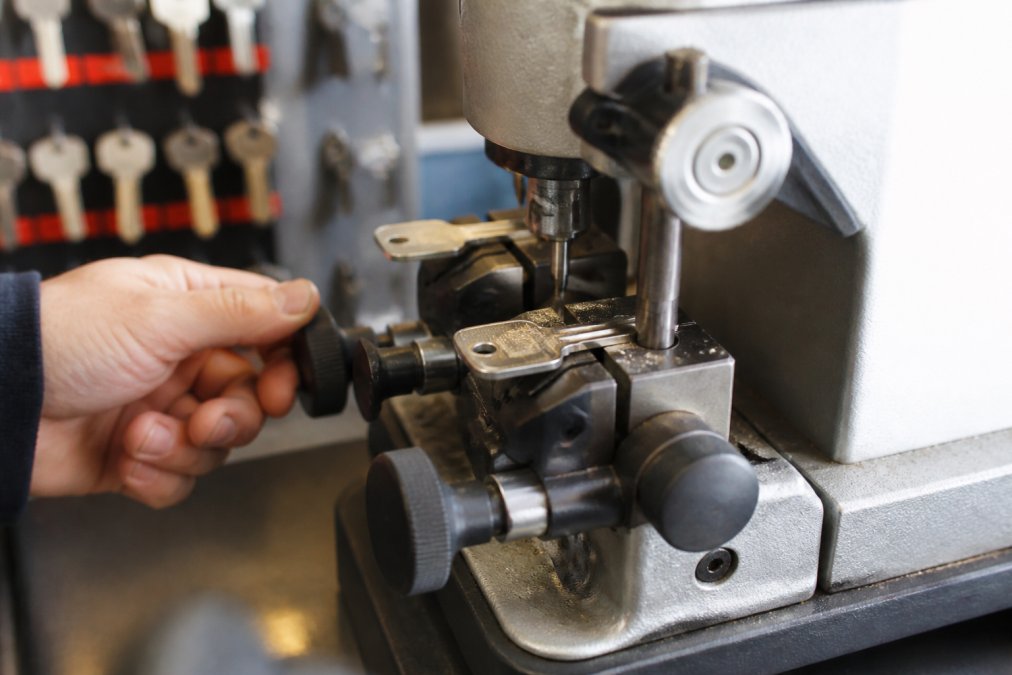
A standard metal key carries its security information entirely in its physical profile: the series of cuts along its blade that correspond to the pins inside a lock cylinder. Duplicating it requires a key blank matching the original's profile and a key machine calibrated to trace or scan those cuts and reproduce them on the blank.
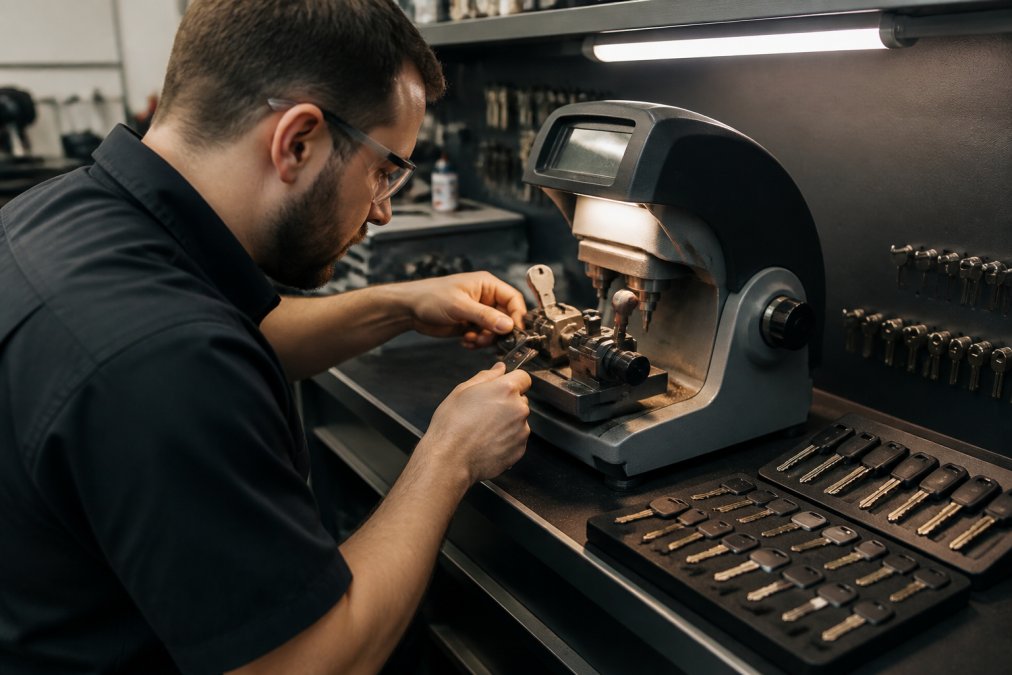
Most key cutting machines work by one of two methods. Older machines use a manual tracer that follows the original key's cuts while a cutting wheel simultaneously carves the same pattern into the blank. Newer machines use optical scanning, where the key is photographed and cut depth data is sent digitally to the cutting head. Optical scanning generally produces more precise results, which matters for high-security residential keys with tight tolerances. The entire process for a standard house key takes two to five minutes once the right blank is identified.
Transponder Keys and Smart Keys: A Different Process
Modern automotive keys contain an embedded microchip that communicates with the vehicle's immobilizer system. Simply cutting the metal blade to match the original is not enough. The chip inside the new key blank must also be programmed to the vehicle's ECU, or the engine will not start even if the key turns freely in the ignition.
Transponder key duplication has two distinct steps: cutting the blade and programming the chip. Smart keys and proximity fobs require only electronic programming, usually via an OBD-II diagnostic port. This is where the gap between a self-service kiosk and a professional automotive locksmith becomes significant.
Where to Copy Keys Near Me: Your Options Compared
Three main channels exist for key duplication, and choosing the right one depends on your key type, timeline, and risk tolerance.
Self-Service Kiosks at Retail Stores
Self-service key cutting kiosks are found in many large grocery chains, home improvement stores, and big-box retailers. Insert your original key, select a key type from the on-screen menu, pay, and the machine cuts a copy in under a minute.
Kiosks handle standard house keys, office keys, and many common residential keys well. They are fast, available outside business hours, and require no staff assistance. The hard limit: kiosks cannot program transponder chips or smart keys. If your vehicle was manufactured after the mid-1990s, the blade copy a kiosk produces will likely turn the ignition but not start the engine. According to the National Automobile Dealers Association's guidance on vehicle security systems, the vast majority of vehicles sold in the last two decades include transponder-based immobilizers as standard equipment.
| Service | Key Types Handled | Programming Capable | Typical Turnaround |
|---|---|---|---|
| Self-service kiosk | House, office, standard metal | No | Under 2 minutes |
| Hardware store counter | House, office, padlock, some car blades | No | 5-15 minutes |
| Automotive locksmith | All types including transponder, smart key, fob | Yes | 30-90 minutes on-site |
Hardware Store Key Cutting Counters
A staffed key cutting counter at a hardware store offers more flexibility than a kiosk. Staff can manually identify key blanks, handle less common key profiles, and catch obvious issues before cutting. Turnaround time is typically five to fifteen minutes. Hardware stores stock a broader range of key blanks than kiosks, which means they can often handle padlock keys, cabinet keys, and specialty residential keys that a kiosk would reject. What they cannot do is program automotive transponder keys.
A common mistake is assuming that because a hardware store cut your car key blade correctly, the key is fully functional. For any vehicle with an immobilizer, it is not.
Professional Automotive Locksmith Services
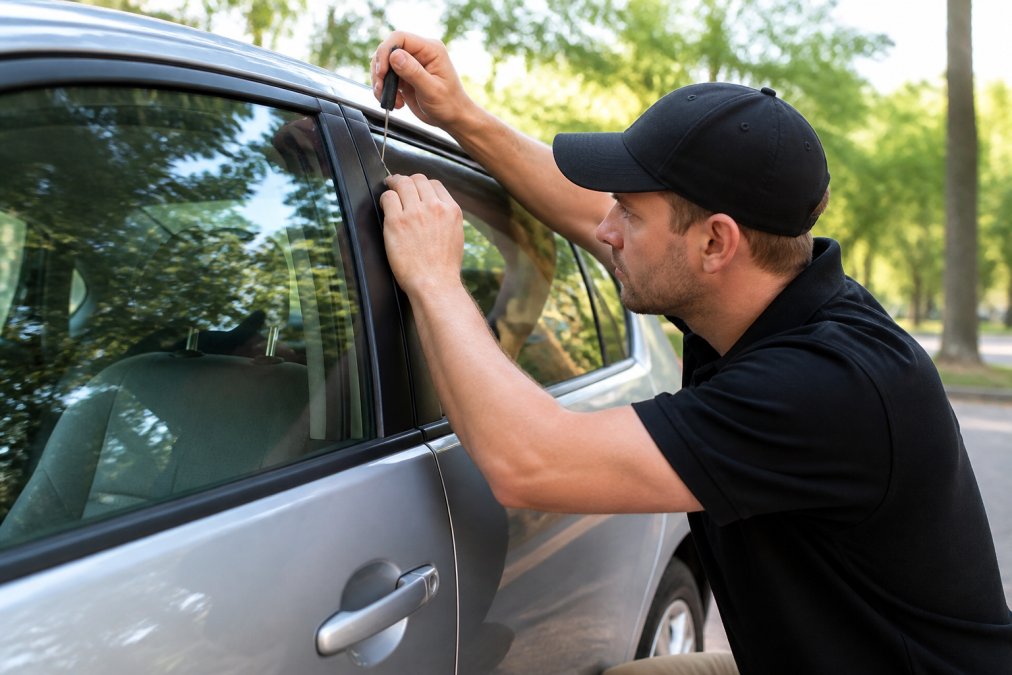
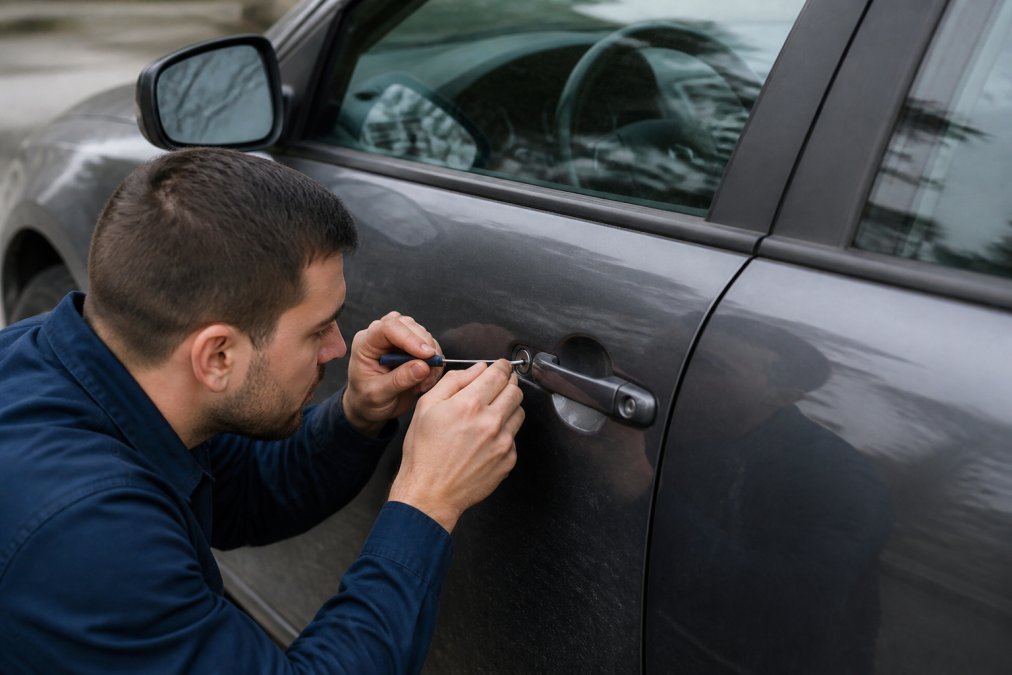
A professional automotive locksmith carries both key cutting equipment and programming tools. This means a single visit handles the complete duplication process for transponder keys, smart keys, and fob programming. On-site service is standard: a mobile locksmith comes to your vehicle's location rather than requiring you to tow or drive to a shop. For anyone dealing with a modern vehicle, this is the only option that produces a fully functional spare key.
Key Material Compatibility: What Can Actually Be Copied
Not every key can be duplicated at every service point, and the reason often comes down to materials and design rather than the service provider's skill.
Standard brass and nickel-silver keys are the easiest to copy. These are the most common materials for house keys and office keys, and virtually every key cutting machine handles them.
High-security residential keys with patented profiles (such as Medeco, Mul-T-Lock, or Abloy designs) are legally restricted: key blanks for these profiles are only sold to licensed dealers, and the key itself is often stamped "Do Not Duplicate." Kiosks and most hardware stores cannot copy these. A licensed locksmith with appropriate dealer authorization can, but expect to provide proof of ownership.
Automotive key blanks come in hundreds of profiles. A mismatch between the blank and the original key's profile produces a key that either won't insert or will insert but not turn. Identifying the correct blank requires either a key identification database or direct measurement.
Car Key Replacement Cost: What Drives the Price
Car key replacement cost varies more than most people expect. The main cost factors are:
- Key type: A basic mechanically cut key for an older vehicle costs far less than a proximity smart key for a current model.
- Vehicle make and model: Some manufacturers use proprietary programming protocols that require specialized equipment. Luxury and European brands often fall into this category.
- Service channel: Dealerships typically charge the most for key replacement because they factor in overhead and parts markup. Independent automotive locksmiths generally offer the same technical capability at a lower price point. According to Consumer Reports' guidance on car key replacement options, getting a quote from an independent locksmith before visiting a dealership is a reliable way to reduce replacement costs without sacrificing quality.
- Emergency vs. scheduled service: After-hours or emergency call-outs typically carry a higher rate than appointments made during business hours.
For current pricing on automotive key programming and duplication, contact JFJ Locksmith directly for a quote specific to your vehicle's year, make, and model.
Key Fob Programming Near Me: Kiosk vs. Locksmith
Key fob programming is not the same as key cutting, and the distinction matters when you're searching for help.
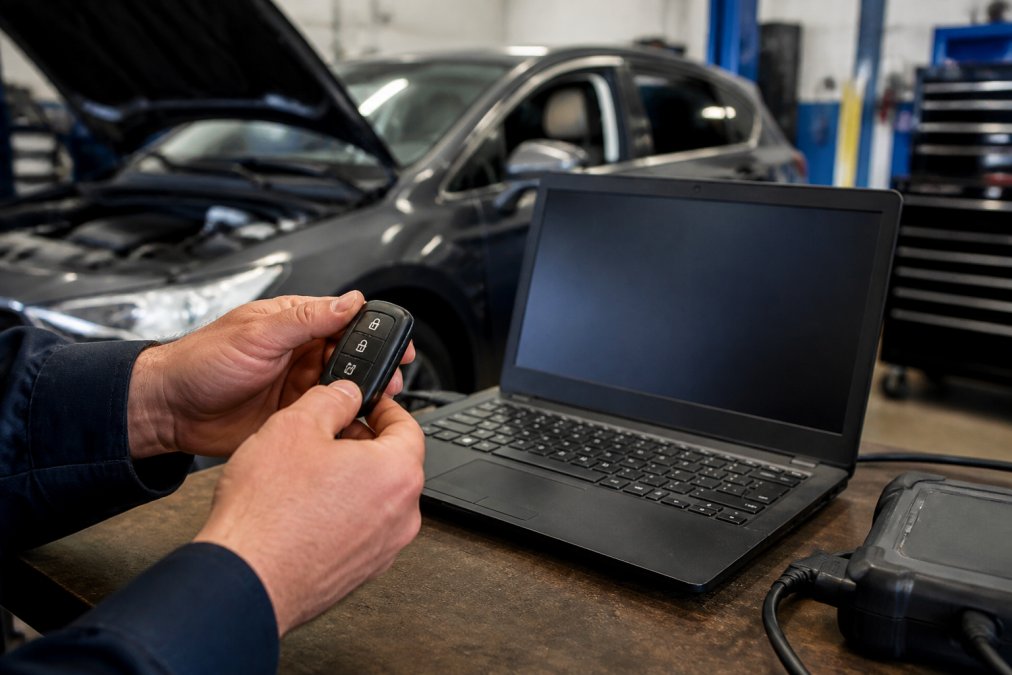
Some self-service kiosks now offer fob copying for certain vehicles using a cloning process: the kiosk reads the radio frequency signal from your existing fob and writes it to a new shell. This works for a limited range of older, simpler fob systems. It does not work for proximity keys, push-button start systems, or any vehicle that uses rolling security codes, which is the standard on most vehicles built in the last decade.
A professional automotive locksmith uses OBD-II diagnostic tools to communicate directly with the vehicle's body control module, authorizing a new key fob to the vehicle's security credentials. This process requires both the right software and a working connection to the vehicle's diagnostic port. If your fob controls remote locking but your vehicle still uses a traditional ignition key, a kiosk clone may work for the locking function while leaving the ignition unprogrammed. If you have a push-button start system, no kiosk currently handles full programming.
JFJ Locksmith specializes in automotive key programming and module programming for many domestic and foreign vehicles. If you're unsure whether your vehicle's fob can be handled without a dealer visit, reaching out with your VIN is the fastest way to get a straight answer.
Emergency vs. Non-Emergency: Choosing the Right Service
Most key duplication situations are non-emergencies: you want a spare key made before something goes wrong. A handful are genuine emergencies: you're locked out right now, in a parking lot, at night, with nowhere to go.
Non-emergency situations allow time to compare options, schedule an appointment, and choose the most cost-effective channel. If you need a spare house key, a hardware store counter handles it in minutes. If you need a spare transponder key for your car, scheduling with an automotive locksmith during business hours typically costs less than an emergency call-out.
Emergency situations require a mobile response. A locksmith who offers emergency vehicle unlocking and on-site key programming can reach you at your location, which is the only practical option when you're stranded. According to the Associated Locksmiths of America's consumer guidance on choosing locksmith services, verifying that a locksmith is licensed and insured before an emergency occurs is the most effective way to avoid being overcharged or poorly served when you're under pressure. Having a trusted automotive locksmith's contact information saved in advance removes the stress of vetting providers while stranded.
Warranty, Liability, and What Happens If Something Goes Wrong
Self-service kiosks typically offer a satisfaction guarantee on the cut itself: if the key doesn't work, you can return it for a replacement cut. What they do not cover is any damage to your lock caused by a miscut key, or any loss resulting from a key that appears to work but fails at a critical moment.
Hardware store key cutting usually carries a similar limited guarantee on the cut. Liability for downstream issues generally falls on the customer.
Professional locksmiths operate differently. A licensed and insured locksmith carries liability coverage for damage that occurs during service. If a vehicle unlocking procedure causes damage to a door panel or lock mechanism, the locksmith's insurance is the mechanism for addressing that. Ask any locksmith directly: Are you licensed? Are you insured? What is your process if something is damaged during service? A reputable provider answers these questions without hesitation.
The "Do Not Duplicate" stamp on a key also carries a liability implication. Copying such a key without authorization from the key's issuing authority can expose the person requesting the copy to legal liability, particularly in commercial or multi-tenant residential settings where key control is part of a security protocol.
Getting duplicate keys made is straightforward for standard metal keys and increasingly complex for modern automotive keys. The biggest source of wasted money and frustration is choosing the wrong service channel for the key type you actually have. JFJ Locksmith handles the full range of automotive key programming, transponder key duplication, and module programming for modern vehicles, providing a professional alternative to dealership pricing without sacrificing technical capability. Get in Touch with JFJ Locksmith to confirm what your vehicle requires and get an accurate quote before committing to any service.
Frequently Asked Questions
Can I get a transponder car key copied at a kiosk?
Most self-service kiosks cut the physical metal key profile but cannot program the transponder chip that modern ignition systems require. Without chip programming, the cut key will fit the lock but the engine will not start. For any vehicle made after the mid-1990s with an immobilizer system, you need either a dealership or a professional automotive locksmith who carries the right programming equipment for your specific make and model.
What should I do if I have lost all copies of my car keys?
Losing every copy means a locksmith or dealer must create a new key from scratch, typically using the vehicle identification number to cut to code. An automotive locksmith can often do this on-site, which is faster and less expensive than a dealership tow-and-replace service. Call ahead with your VIN, year, make, and model so the technician arrives with the correct key blank and programming hardware. Do not leave the vehicle unattended in an unsafe location while you arrange service.
How long does it take to program a new key fob?
A straightforward key fob programming session typically takes 20 to 45 minutes once a technician is on-site with the right equipment. Vehicles with advanced security systems or those requiring module-level programming can take longer. Turnaround time also depends on whether a new key blank needs to be cut first. Scheduling with a mobile automotive locksmith rather than waiting for a dealership appointment usually gets you back on the road the same day.
Do Home Depot or Lowe's copy car keys?
Both hardware stores can duplicate basic metal house and office keys at in-store key cutting counters or self-service kiosks. For standard car door keys without a transponder chip, they may be able to cut a copy from a key blank. However, neither retailer programs transponder keys, smart keys, or key fobs. For any modern vehicle key that requires chip programming or fob pairing, a professional automotive locksmith is the correct option.
This article was written using GrandRanker