 Ultimate guide
How Much Should an Emergency Locksmith Cost?
Table of Contents
- What Drives Emergency Locksmith Cost?
- Understanding the Emergency Locksmith Service Call Fee
- Average Cost for Car Key Programming vs. Dealership Pricing
- Rekeying vs. Lock Replacement: Which Costs Less?
- What to Expect During an Emergency Lockout Service
- How to Avoid Locksmith Scams and Predatory Pricing
- How to Get a Fair Emergency Locksmith Cost Estimate
- Frequently Asked Questions
Last Updated: August 28, 2026
Getting stranded outside your car or home is stressful without the added anxiety of not knowing what a locksmith will charge. Emergency locksmith cost catches most people off guard because they're calling from a parking lot at 11 PM with no time to compare quotes. At JFJ Locksmith, we field this question constantly, and the honest answer is: pricing varies widely depending on several factors worth understanding before you're in that situation.
This guide breaks down what drives locksmith pricing, what a fair bill looks like, and how to protect yourself from predatory operators who exploit emergency situations.
What Drives Emergency Locksmith Cost?
Emergency locksmith cost is determined by service type, time of day, geographic location, lock complexity, and hardware involved. Anyone who quotes a firm price over the phone without knowing these details should raise your suspicion immediately.
The most transparent locksmiths tell you upfront that their quote is an estimate, not a guarantee, until they've assessed the situation on-site. A locksmith who locks in a rock-bottom price before seeing the job often adds surprise charges once they arrive.
Type of Service: Residential, Commercial, or Automotive
Residential lockout services typically involve standard door locks, deadbolts, and entry hardware, usually the most straightforward jobs.
Commercial locksmith work costs more. Commercial properties often use high-security lock cylinders, access control systems, or master key systems requiring specialized tools and deeper technical knowledge.
Automotive locksmith services occupy their own category. Modern vehicles involve electronic systems, transponder keys, and sometimes full module programming. According to the Associated Locksmiths of America, automotive locksmith work has grown significantly more technical over the past decade as vehicle manufacturers have integrated sophisticated anti-theft systems.
Lock Complexity and Hardware Requirements
Not all locks are equal. A basic pin tumbler lock takes less time and fewer tools than a high-security cylinder with anti-pick pins. Hardware requirements add another variable. If a lock needs replacement rather than just opening, the cost of the hardware itself factors into the final bill. A legitimate locksmith itemizes these separately so you can see exactly what you're paying for.
Understanding the Emergency Locksmith Service Call Fee
The service call fee (also called a trip charge or dispatch fee) is the baseline cost a locksmith charges just to show up. This covers travel time, fuel, and administrative dispatch costs.
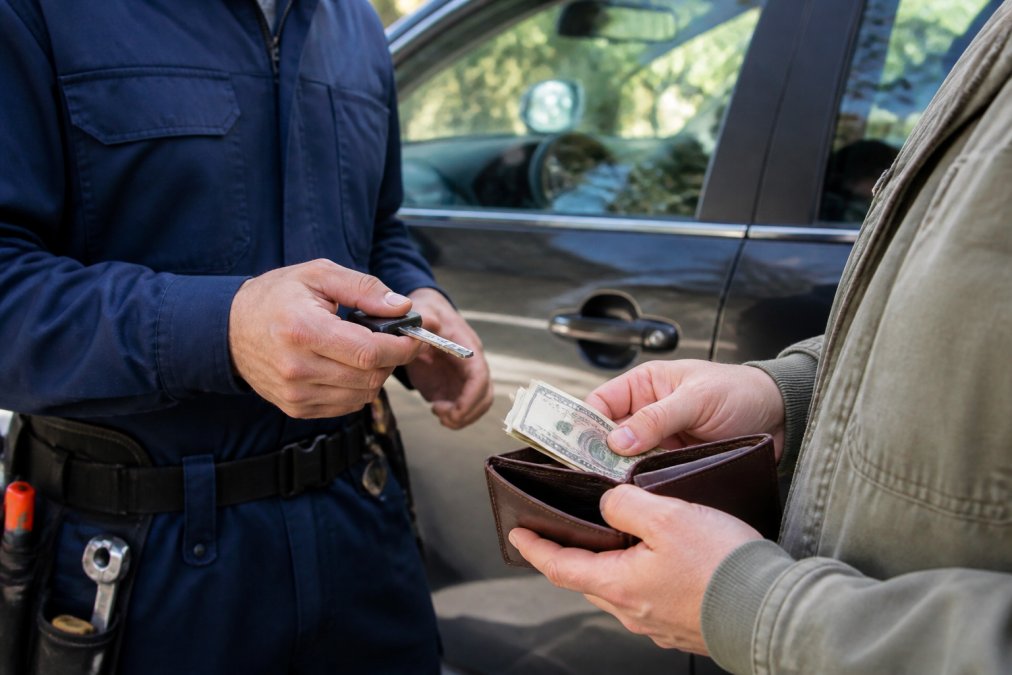
The service call fee and labor charge are separate line items. The trip charge gets you the locksmith at your door; the labor charge covers the actual work. On a legitimate invoice, both appear as distinct entries.
Service area radius matters. A locksmith dispatched from a nearby location typically charges less than one traveling a significant distance. Working with a local provider is almost always more cost-effective than calling a national dispatch service that routes you to a distant subcontractor.
After-Hours, Weekend, and Holiday Surcharges
After-hours surcharges are standard and legitimate, because technicians working overnight, weekends, or holidays are compensated for the inconvenience.
A responsible provider discloses the after-hours surcharge clearly before dispatching. If a locksmith won't tell you the surcharge amount when asked directly, that's a warning sign.
Holiday rates typically sit above standard weekend rates. Some providers charge a flat rate that incorporates the after-hours premium; others charge a base fee plus a separate emergency fee. Ask which model applies before confirming service.
Average Cost for Car Key Programming vs. Dealership Pricing
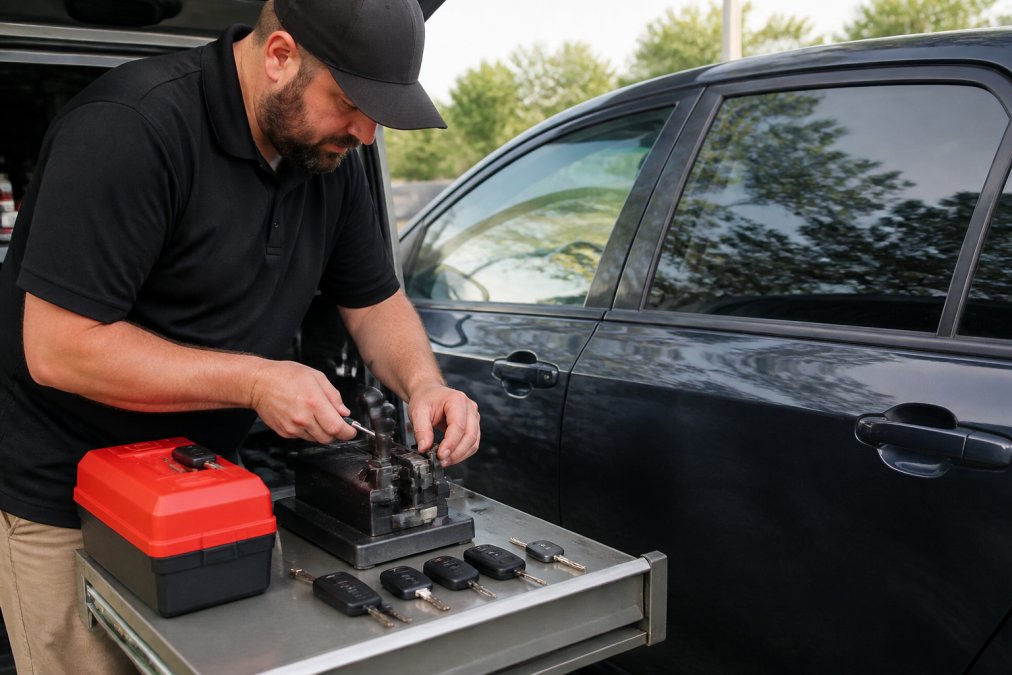
Car key programming is one area where the gap between a qualified automotive locksmith and a dealership can be substantial. Dealerships have significant overhead reflected in their service rates. An automotive locksmith specializing in key programming typically performs the same work at a competitive price point.
The exact figures depend on your vehicle's make, model, year, and key system type. What's consistent is that specialized automotive locksmiths generally offer competitive pricing for key programming, often with faster turnaround. The National Automobile Dealers Association notes that dealership service departments operate with substantially higher overhead than independent specialists.
Smart Keys, Fobs, and Automotive Module Programming
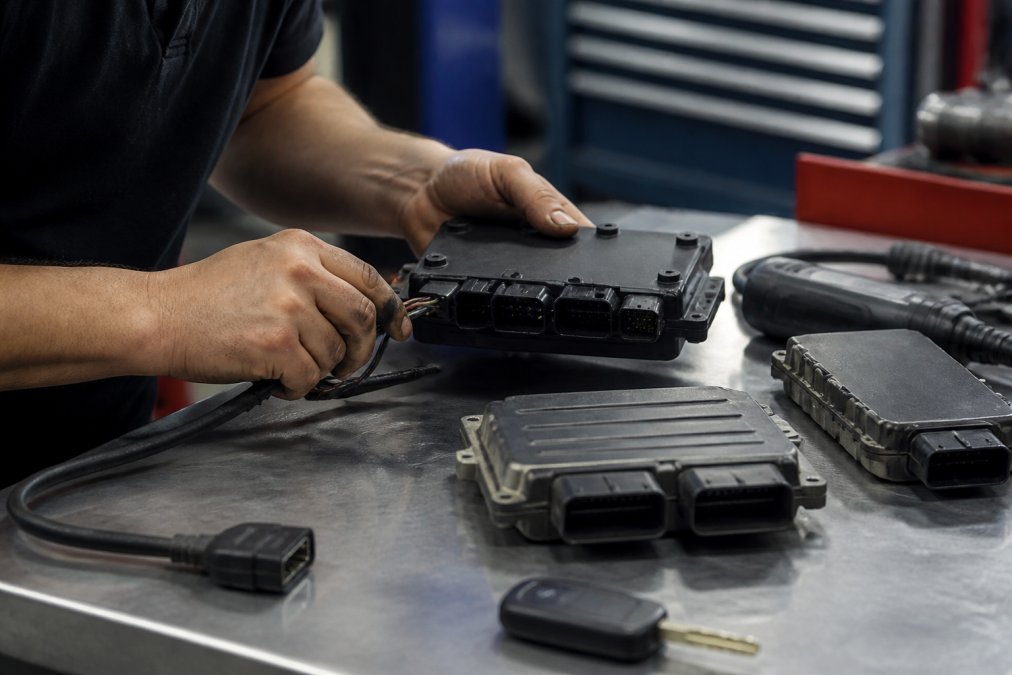
Modern vehicles use transponder keys, proximity fobs, and electronic control module programming as part of their security architecture. Programming a basic transponder key differs from coding a proximity fob or reprogramming an automotive security module after replacement.
Not every locksmith is equipped to handle all of these. A shop handling residential deadbolts but occasionally dabbling in automotive work may lack the diagnostic tools required for a 2022 or newer vehicle. Verifying a locksmith's specific automotive capabilities before hiring matters, especially for modern vehicles.
Rekeying vs. Lock Replacement: Which Costs Less?
Rekeying is almost always the less expensive option and the smarter choice for most situations.
Rekeying means a locksmith disassembles the lock cylinder and replaces internal pins so only a new key operates it. The lock hardware stays in place. This is appropriate when your lock is in good condition but you need to invalidate old keys.
Lock replacement means removing existing hardware entirely and installing new hardware. This is necessary when the lock is damaged, when upgrading to higher-security options, or when adding a smart lock requiring different mounting hardware.
| Scenario | Recommended Option | Why |
|---|---|---|
| Lost or stolen key | Rekeying | Lock hardware is fine; just invalidate old key |
| Damaged lock mechanism | Replacement | Rekeying won't fix mechanical failure |
| Security upgrade (higher grade) | Replacement | New hardware provides the improvement |
| New home or new tenant | Rekeying | Cost-effective way to control key access |
| Adding smart lock functionality | Replacement | Smart locks require different hardware |
| Key duplication concern | Rekeying | Faster and cheaper than full replacement |
The Underwriters Laboratories lock grading standards provides a framework for understanding what "higher security" means when deciding whether to rekey or upgrade hardware.
What to Expect During an Emergency Lockout Service
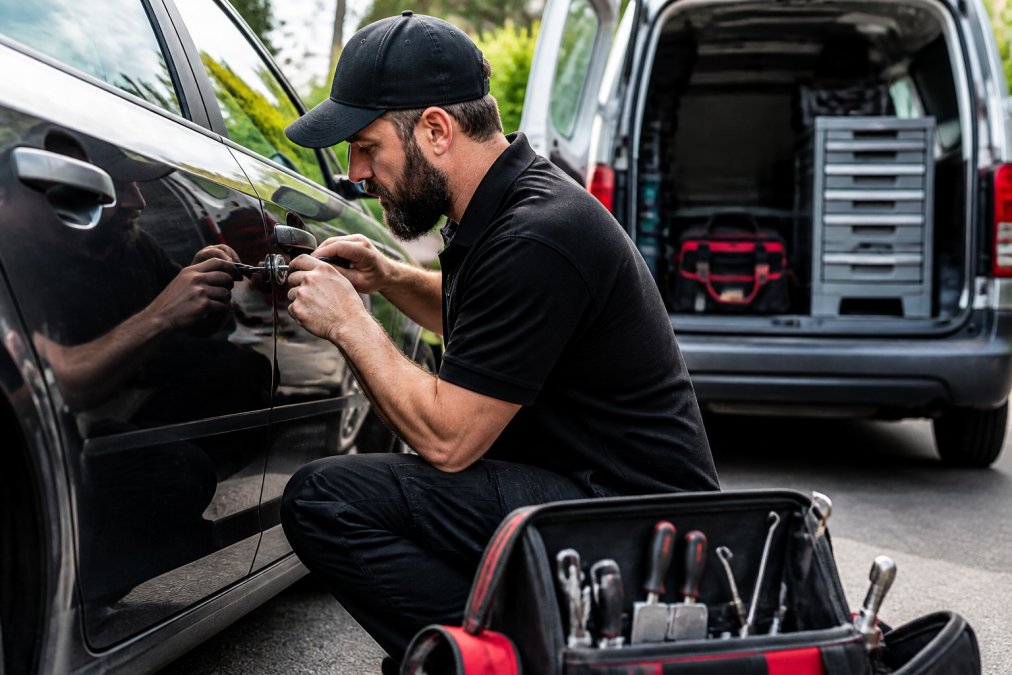
A professional lockout service follows a predictable sequence. First, the technician assesses the lock and entry point before touching anything. A qualified locksmith examines the hardware, identifies the lock type, and determines the least invasive method to gain entry.
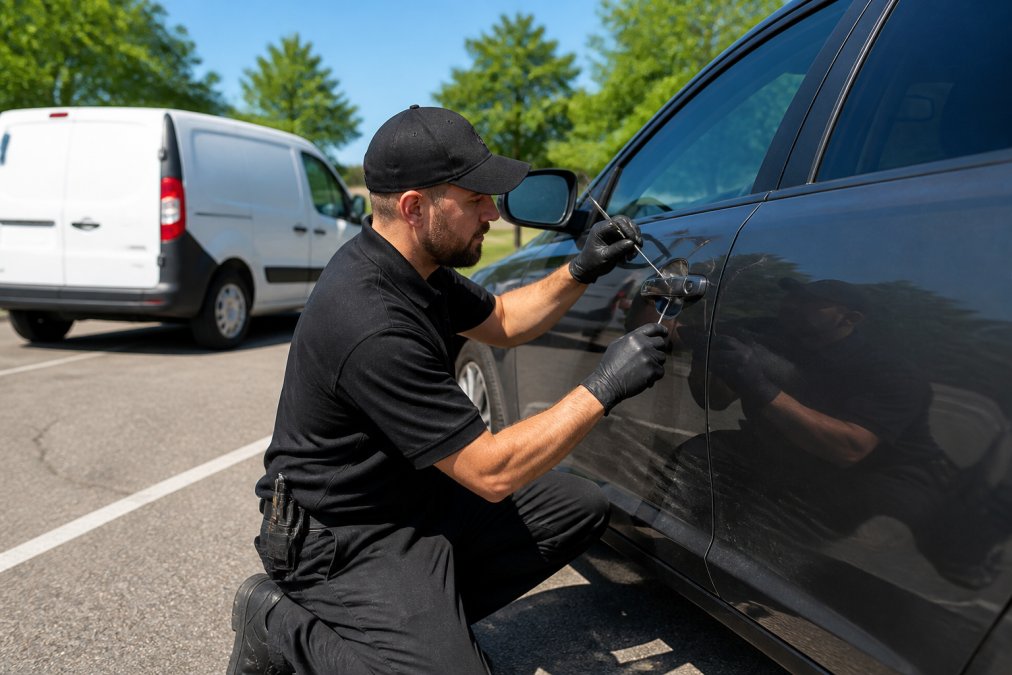
The actual entry process on a standard vehicle lockout takes a trained technician only a few minutes. If a locksmith takes an unusually long time or applies excessive force, that's worth noting.
After gaining entry, a legitimate technician confirms the vehicle is yours before handing it back. Expect to show identification and proof of ownership. This protects you as much as it protects the locksmith.
Itemized Invoice: What a Legitimate Bill Should Show
A proper itemized invoice should clearly show:
- Service call fee / trip charge: The baseline dispatch cost
- Labor charge: The cost for actual work performed, either flat rate or hourly
- After-hours or emergency surcharge: If applicable, listed separately
- Hardware costs: Any parts used listed individually
- Tax: Where applicable
Never accept a single lump-sum number with no breakdown. If a locksmith refuses to itemize charges, that's a serious red flag.
How to Avoid Locksmith Scams and Predatory Pricing
Locksmith scams cluster around emergency situations because distressed customers are less likely to comparison shop. The scam model is straightforward: advertise a low service call fee to get dispatched, then inflate the final bill with fabricated charges.
Common tactics include advertising very low trip charges, claiming the job is "more complex than expected," refusing written estimates before starting work, showing up in unmarked vehicles, and charging separately for items that should be included.
The Federal Trade Commission consumer guidance on service scams documents this pattern and recommends getting written estimates before any work begins.
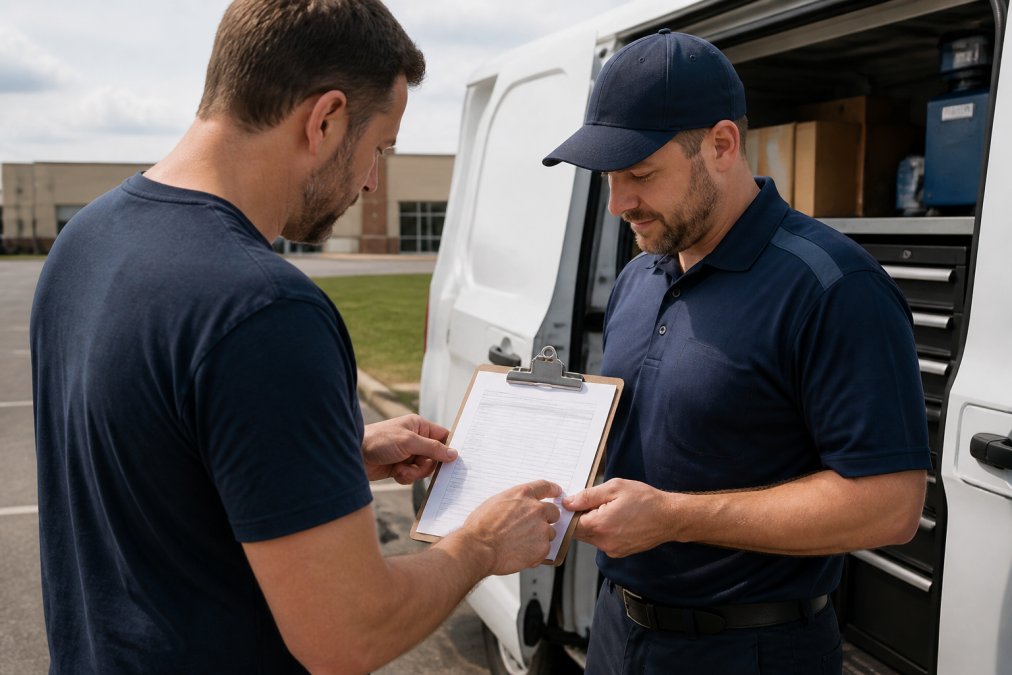
Verifying Credentials and Insurance Before You Hire
Credential verification prevents most bad outcomes. Before confirming dispatch, check:
- State licensing: Many states require locksmiths to hold a license. Verify with your state's licensing board.
- Business registration: A legitimate locksmith operates as a registered business. Ask for the business name and look it up.
- Insurance: Ask whether the locksmith carries liability insurance. If they're uninsured and something goes wrong, your recourse is limited.
- Physical address: Verify the address is real before calling.
- Association membership: Membership in organizations like the Associated Locksmiths of America indicates commitment to professional standards.
A locksmith who takes offense at being asked these questions is telling you something important.
How to Get a Fair Emergency Locksmith Cost Estimate
Getting a fair estimate requires asking the right questions before the technician is dispatched.
The sequence that protects you:
- State your situation clearly: Describe the service type, location, and lock or vehicle type.
- Ask for a full estimate: Request both the service call fee and estimated labor charge. Confirm whether any after-hours surcharge applies.
- Confirm the pricing model: Ask whether they charge a flat rate or hourly rate.
- Get it in writing: For non-emergencies, request a written estimate via text or email. For true emergencies, get verbal confirmation of total estimated cost.
- Confirm credentials before dispatch: Ask for business name, license number, and liability insurance status.
- Clarify hardware costs: Ask whether the estimate includes parts or only labor.
The best time to research local locksmiths is before you need one. Save a trusted provider's number in your phone now. That single step eliminates most risk associated with emergency locksmith hiring.
For automotive locksmith needs, working with a specialist who has diagnostic tools and software to handle modern vehicle security systems is worth the research. JFJ Locksmith provides automotive key programming, module programming, and vehicle unlocking services with the technical equipment required for modern vehicles. Get in touch before you're stranded, and you'll know exactly who to call when it matters.
Being locked out is never convenient, and the pressure of the moment makes it easy to accept the first locksmith who answers. The emergency locksmith cost you pay should reflect legitimate labor, transparent fees, and qualified work, not the desperation of your situation. JFJ Locksmith's team is equipped for automotive lockouts, key programming, and module security coding across modern vehicles. Get in touch to understand what your specific situation would involve before you need it.
Frequently Asked Questions
How much should an emergency locksmith charge for a lockout?
Emergency locksmith cost for a lockout varies based on your location, the time of day, and the type of vehicle or lock involved. A licensed professional will typically quote a trip charge plus labor before starting any work. After-hours and holiday service calls carry surcharges on top of the base rate. Always ask for an on-site estimate in writing before authorizing work, and contact your provider directly for current pricing specific to your situation.
Is it standard practice for locksmiths to charge a service call fee?
Yes. A service call fee, sometimes called a trip charge or dispatch fee, covers the cost of sending a technician to your location. This fee applies regardless of how quickly the job is completed. Legitimate locksmiths disclose this fee upfront before arriving. If a provider quotes only a vague total with no mention of a separate service call fee, ask for a full breakdown. Transparency about the trip charge is a reliable sign of a trustworthy operation.
How can I tell if an emergency locksmith quote is a scam?
Red flags include an unusually low phone quote that jumps dramatically once the technician arrives, pressure to pay cash only, no business name on the vehicle, and refusal to provide a written estimate. Legitimate locksmiths carry verifiable credentials, are listed with a recognized locksmith association, and provide an itemized invoice. Check online reviews, confirm the business address is real, and ask whether the technician is licensed and insured before authorizing any work.
Is it cheaper to go to a locksmith for car key programming than a dealership?
An automotive locksmith typically charges less than a dealership for car key programming because overhead costs are lower and mobile service eliminates towing fees. The cost for car key programming through a locksmith is generally competitive with dealer rates, though the exact difference depends on your vehicle's make, model year, and the type of key or fob required. For modern vehicles with transponders or smart keys, a qualified automotive locksmith with the right programming equipment can handle the job at a competitive rate.