 How-to
Can Locksmiths Program Modern Car Modules?
Table of Contents
- Can Locksmiths Program Modern Car Modules?
- How Car Key Programming and Module Synchronization Works
- What Locksmiths Can Actually Program
- Car Module Programming Tools and Their Limitations
- Dealer vs. Locksmith Module Programming: What You Need to Know
- Automotive ECU Programming Cost: Locksmith vs. Dealership
- Security and Warranty Implications
- When to Contact a Professional Locksmith
- Frequently Asked Questions
Last Updated: September 3, 2026
Can Locksmiths Program Modern Car Modules?
Modern vehicle security relies on sophisticated electronic control modules, immobilizer systems, and encrypted transponder keys far beyond simple mechanical locks. The short answer: locksmiths can program some modern car modules, but not all. Most can handle basic transponder key programming and key fob synchronization through the vehicle's OBDII diagnostic port. However, dealer-level module programming, requiring factory-level access to the vehicle's central gateway module or ECU, remains restricted to authorized dealerships. Understanding this boundary affects your cost, timeline, and whether you need a professional locksmith or dealership.
How Car Key Programming and Module Synchronization Works
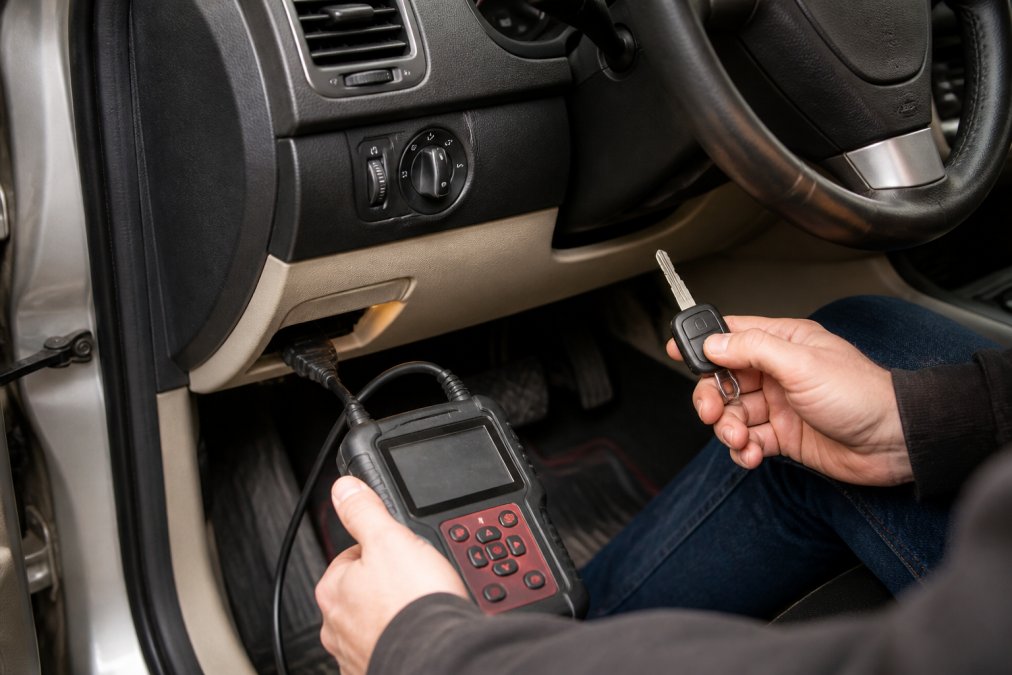
Modern vehicle security relies on a handshake between your key and the vehicle's electronic systems. When you insert a transponder key or press your key fob, the vehicle's immobilizer system verifies that the key's encrypted security pin code matches what's stored in the ECU (engine control unit) and BCM (body control module). If the codes don't match, the engine won't start.
The Role of the ECU and BCM in Vehicle Security
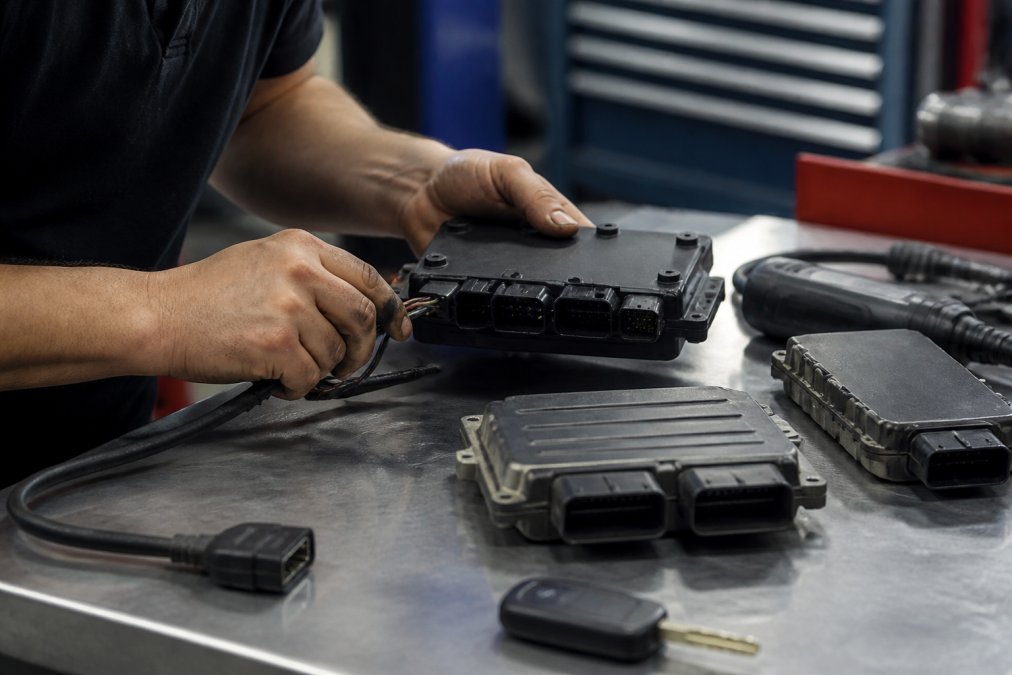
The ECU manages engine functions and ignition security. The BCM controls body systems like door locks, windows, and keyless entry. Both communicate through the vehicle's CAN bus, allowing different electronic systems to exchange data. When you program a new key, these modules must be updated to recognize the new key's unique encryption signature.
Factory-level access to reprogram the ECU or BCM requires specialized diagnostic tools and software that dealerships maintain under strict licensing agreements with manufacturers. Most aftermarket diagnostic tools cannot write to these core security modules. They can read data, but writing new security parameters demands OEM (original equipment manufacturer) access that third-party providers don't have.
Transponder Keys and the Immobilizer System
A transponder key contains a microchip that broadcasts an encrypted code when activated by the vehicle's reader antenna, usually in the ignition switch. The immobilizer system compares this code against security pin codes stored in the vehicle's security module. Modern transponder keys use rolling codes, the encryption changes with each use, making them far more difficult to clone than older fixed-code systems (peer-reviewed research).
Programming a transponder key involves placing the vehicle in a special programming mode and using a programming device to teach the vehicle's immobilizer system to accept the new key's code. This process synchronizes the new key's credentials with the vehicle's security modules.
What Locksmiths Can Actually Program
Professional locksmiths with automotive expertise can handle several key programming tasks within the OBDII diagnostic scope without requiring dealer-level factory access.
Key Fobs and Remote Head Keys
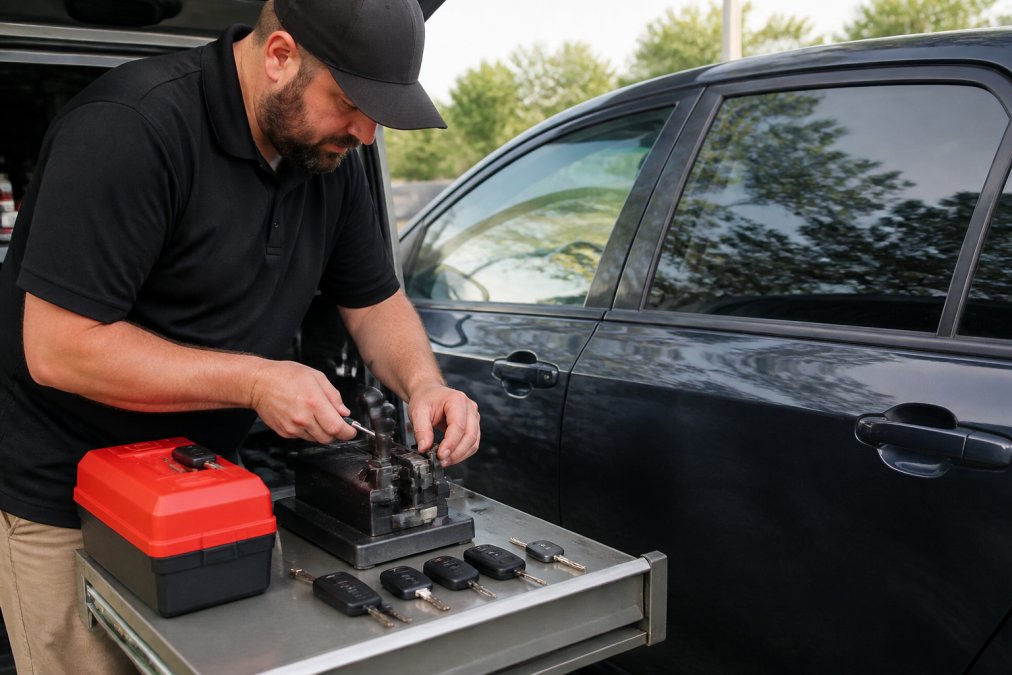
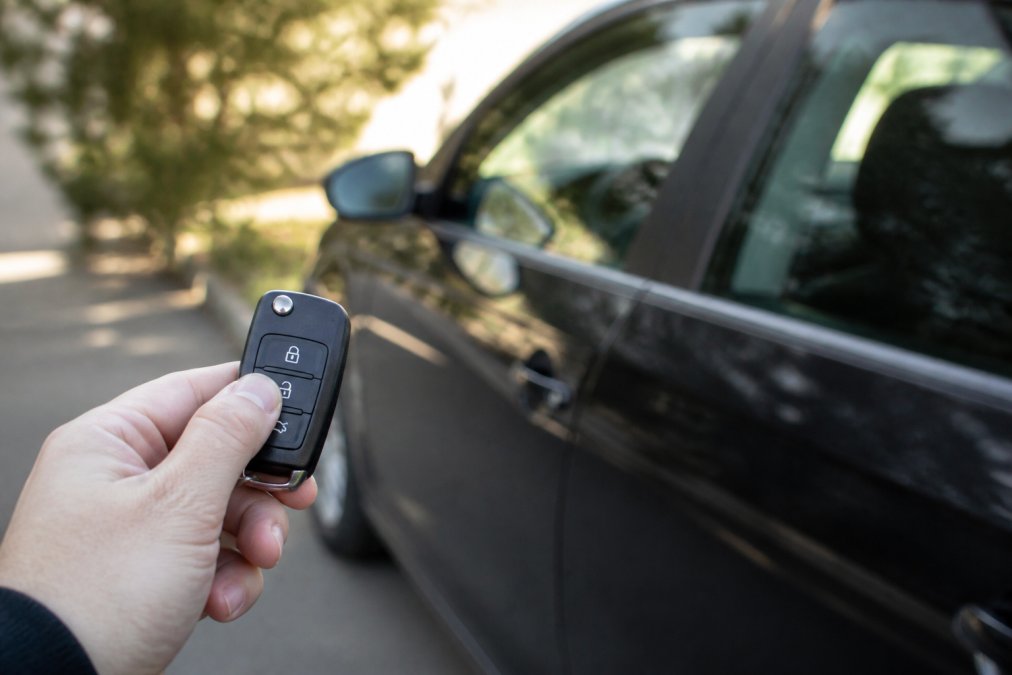
Key fob programming is one of the most common locksmith services. A key fob is a remote device that locks and unlocks your doors and sometimes opens the trunk. Remote head keys combine a traditional key blade with integrated fob electronics. Both can usually be programmed through the OBDII port without accessing the vehicle's core security modules.
The process typically involves entering a programming mode through a specific sequence of actions or using a diagnostic scanner connected to the OBDII port. Once in programming mode, the vehicle learns to recognize the new fob's signal frequency and code. Locksmiths can often program aftermarket key fobs as long as the fob is compatible with your vehicle's frequency and protocol, though newer luxury vehicles may require additional security verification or dealer involvement.
Basic Transponder Programming via OBDII
Basic transponder key programming through the OBDII port is achievable for many locksmiths. This involves connecting a diagnostic scanner to the vehicle's OBDII port and using the scanner's programming functions to teach the immobilizer system to accept a new key's code. The vehicle must be in the correct programming mode, and the locksmith must have access to the correct procedure for your specific make, model, and year.
This works because you're updating the immobilizer system's list of valid key codes, a function manufacturers intentionally made accessible through the OBDII interface for roadside assistance and emergency key replacement. However, not all vehicles support OBDII-level transponder programming, and if your immobilizer system has been corrupted or requires a complete security module reset, OBDII-level programming won't solve the problem.
Car Module Programming Tools and Their Limitations
The tools available to locksmiths have limitations built in by manufacturers.
OBDII Diagnostic Ports vs. Dealer-Level Access
The OBDII port was mandated by environmental regulations to provide standardized diagnostic access (the EPA). However, manufacturers carefully controlled which functions are accessible through OBDII and which remain locked behind dealer-only security protocols.
Dealer-level diagnostic equipment connects to deeper vehicle networks and uses factory security certificates that authenticate technicians as authorized manufacturer representatives. This allows access to security-critical functions like ECU reprogramming and immobilizer reset. Aftermarket diagnostic tools lack these security certificates, and manufacturers actively prevent unauthorized access through encryption and authentication protocols.
A locksmith's diagnostic scanner can perform OBDII-level functions: read fault codes, access some programming modes, and update certain modules like the BCM. But it cannot access the secure gateway module controlling core vehicle security. That's an intentional security design, not a tool limitation.
Aftermarket Tools and OEM Restrictions
Aftermarket tool manufacturers produce equipment for the locksmith and independent repair markets. However, vehicle manufacturers actively restrict what these tools can do through software updates and new security architectures. Some aftermarket tools claim to bypass these restrictions, but using such tools to reprogram security modules without authorization violates the Digital Millennium Copyright Act (DMCA) and vehicle manufacturer terms of service, creating liability issues if something goes wrong (copyright.gov).
Aftermarket tools work well within their design scope, and that scope is intentionally limited by manufacturers. Locksmiths operating within these boundaries provide legitimate, reliable service.
Dealer vs. Locksmith Module Programming: What You Need to Know
Understanding the difference between what a locksmith can do and what requires dealership service helps you make the right choice.
Why Dealerships Have Factory-Level Access
Dealerships are authorized by vehicle manufacturers to perform any service, including complete security module reprogramming. They have access to manufacturer-specific diagnostic software, security certificates, and technical documentation. When a vehicle's security system has been compromised, corrupted, or needs a complete reset, dealerships can reprogram the ECU, BCM, and gateway modules directly.
Dealerships maintain strict documentation and security protocols. Every security module reprogramming is logged, tracked, and auditable, creating a clear chain of custody that protects both the dealership and vehicle owner.
What Locksmiths Cannot Do Without Dealership Involvement
Locksmiths cannot reprogram your vehicle's core security modules (ECU, BCM, or gateway module) without manufacturer authorization. They cannot perform a complete immobilizer reset if the system has been corrupted, reprogram VIN-based security parameters, or bypass encryption protocols that manufacturers have intentionally restricted.
If your vehicle requires these services, you need a dealership. However, locksmiths can often accomplish what you actually need through legitimate means. If you've lost all your keys, a locksmith can usually program new transponder keys through OBDII-level access. If your key fob isn't working, a locksmith can often reprogram or replace it. The key is understanding which specific service you need and whether it falls within OBDII scope or requires dealer-level access.
Automotive ECU Programming Cost: Locksmith vs. Dealership
Dealership ECU programming and security module reprogramming typically costs significantly more than locksmith services due to technician time, diagnostic software licensing, and administrative overhead. A complete ECU reprogram can cost several hundred dollars depending on the vehicle.
Locksmith services for basic transponder key programming and key fob replacement are generally less expensive. However, cost should never be your only consideration. If your vehicle actually needs dealer-level module programming, choosing a locksmith simply to save money creates the risk of incomplete or unsuccessful service. Use a locksmith for services within their legitimate scope. If you need ECU reprogramming, complete immobilizer reset, or security module replacement, budget for dealership service.
Security and Warranty Implications
Programming decisions carry consequences beyond immediate cost and convenience. When you have a key programmed through unauthorized means, your vehicle's security integrity is compromised. Insurance companies can deny claims if they discover vehicle security work was performed outside authorized channels. Manufacturer warranties explicitly exclude coverage for damage caused by unauthorized security module access.
Professional locksmiths understand these implications and work within legitimate boundaries. They use authorized diagnostic tools, perform only services within OBDII scope, and maintain documentation of their work. This protects both you and your vehicle.
When to Contact a Professional Locksmith
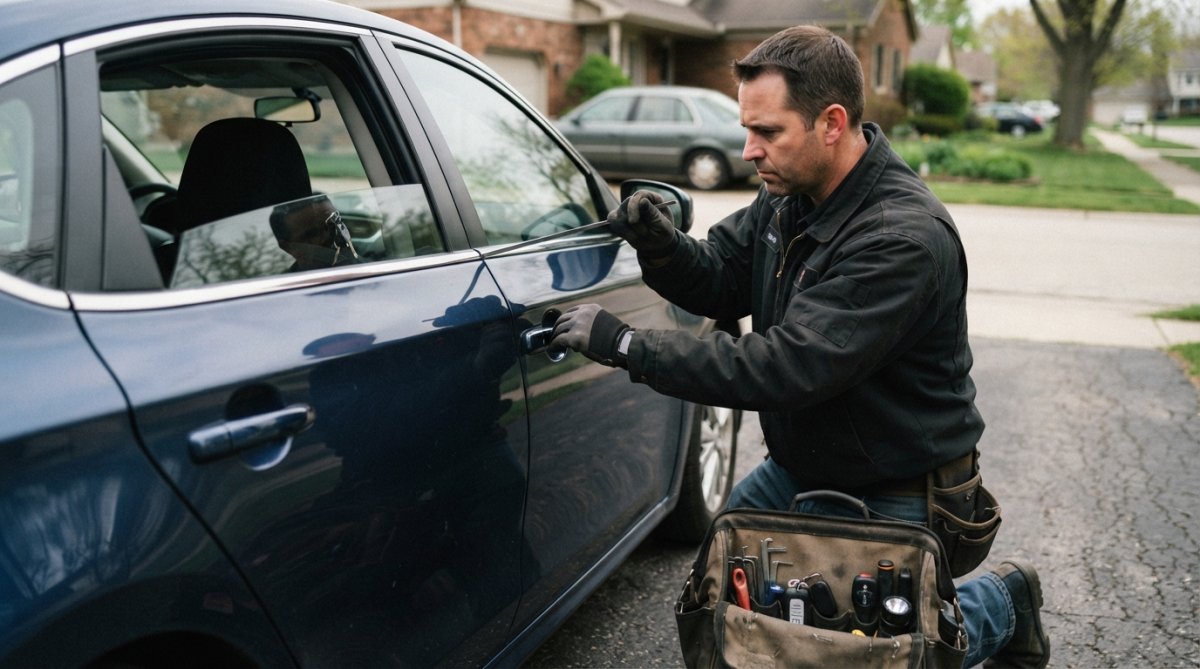
A professional locksmith is your best choice when you're locked out of your vehicle and need immediate access, have lost your keys and need new ones programmed, your key fob stopped working, you need a spare key created and programmed, or you want professional guidance on what's possible for your vehicle.
Contact a dealership when your vehicle's security system has failed completely, you've experienced electrical system damage, you need a security module replaced or completely reprogrammed, or your vehicle won't start due to immobilizer system corruption that OBDII-level programming cannot fix.
Modern vehicle security is more complex than a decade ago, but also more transparent. Manufacturers have clearly defined what locksmiths can access through OBDII and what remains restricted to dealership-level service. Understanding this boundary helps you choose the right service provider for your specific situation. JFJ Locksmith specializes in professional vehicle unlocking and automotive key programming within legitimate technical scope, using proper diagnostic equipment and maintaining full transparency about what's possible for your vehicle. When you need automotive locksmith services in the Elkhart area, contact our team to discuss your situation and find the right solution.
Frequently Asked Questions
Q: Can a locksmith reprogram an ECU on a modern car?
A: Most locksmiths can reprogram basic transponder keys and key fobs through the OBDII port, but full ECU reprogramming typically requires dealer-level diagnostics and factory-level access. Locksmiths lack the encryption keys and proprietary software that manufacturers restrict to authorized dealerships. For complete module synchronization or security system resets, dealership involvement is usually necessary to maintain vehicle security and warranty compliance.
Q: What's the difference between car module programming tools that locksmiths use versus dealer tools?
A: Aftermarket diagnostic tools can read and write basic transponder data through the OBDII port, but they cannot access the secure gateway modules or perform full ECU rewrites that dealer-level diagnostics can. Dealership software has factory-level access to proprietary encryption protocols and VIN-based security pins. Locksmiths work within these limitations, handling key fob programming and basic immobilizer resets, while dealers control the deeper module synchronization and security protocols that modern vehicles require.
Q: Should I go to a locksmith or dealership for car module programming?
A: For lost key fobs, remote head keys, or basic transponder replacement, a professional locksmith offers service. For complex module reprogramming, ECU resets, or if your vehicle shows security system errors, dealership involvement is safer and protects your warranty. A locksmith can diagnose whether your issue requires dealer-level access or can be resolved with standard programming tools, helping you avoid unnecessary dealership fees.
Q: How much does automotive ECU programming cost compared to a locksmith?
A: Dealership ECU reprogramming typically costs significantly more due to factory-level diagnostics and proprietary access. Locksmith pricing for key fob programming and basic transponder work is generally lower because the work is less complex. Exact costs depend on your vehicle's security system, whether you need key cutting, module synchronization, or full ECU access. Contact a professional locksmith for a quote tailored to your specific vehicle and security needs.